Day one morning: Osaka Castle and its grounds
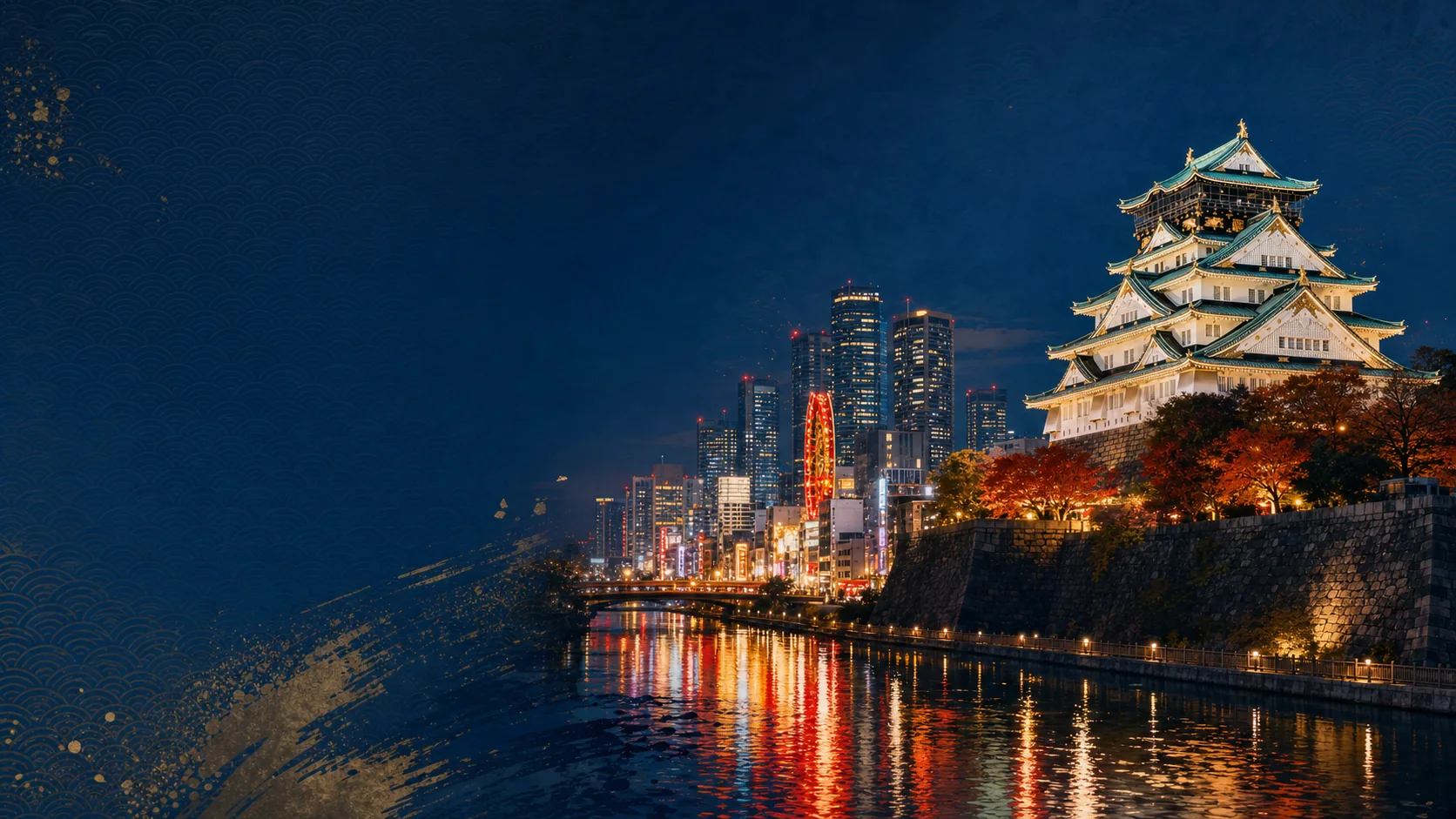
Start at Osaka Castle, where the moats, gates and museum establish the political history behind modern Osaka.
Approach through the wider park instead of treating the main keep as an isolated photo stop. The surviving stone walls and water defences make the scale of the complex clear, while the reconstructed tower presents the Toyotomi and Tokugawa eras in an accessible sequence. The official visitor guide explains that the present tower was rebuilt with support from Osaka citizens, an important part of its modern story.
Allow the morning to unfold without a second distant booking. After the museum, walk a different side of the moat and pause at the outer gates before leaving. The castle area is served by several rail and metro stations, so choose the exit that best matches your next stop rather than automatically retracing your route. Check the official castle page for current access information.
- Arrive with enough time for both the grounds and museum.
- Use the official Osaka Metro map to select the nearest useful station.
- Keep a weatherproof layer for the exposed park paths.
Day one afternoon: Shitennoji and Shinsekai
Continue south to Shitennoji, then contrast its temple precinct with the bright, informal streets of Shinsekai.
Shitennoji gives the itinerary chronological depth. The official Osaka guide traces its foundation to Prince Shotoku, placing the site far earlier than the castle and the merchant districts. Move quietly through active worship areas, follow posted photography guidance and avoid blocking approaches to halls or ritual spaces. This is a religious site first, even when the grounds are busy with visitors.
Shinsekai is a short onward journey and changes the mood completely. Walk around Tsutenkaku and Janjan Yokocho before choosing somewhere to eat; the district is more rewarding when explored as a neighbourhood rather than a checklist. Small restaurants may have compact seating and their own ordering customs, so observe signs and staff guidance rather than assuming every shop works alike.
- Dress and speak respectfully inside the temple grounds.
- Photograph only where local signs permit it.
- Choose one or two dishes instead of turning every stop into a full meal.
Day one evening: Namba and Dotonbori
Finish the first day in Namba, using the Dotonbori canal as the anchor for an unhurried evening walk.
Dotonbori is at its most atmospheric after the signs illuminate and the canal catches their reflections. Begin on the quieter approaches, cross the bridges for changing views and then explore the parallel shopping streets. The official tourism page identifies the area as a central entertainment and restaurant district, so expect dense foot traffic and allow extra time around popular photo points.
Dinner works best as a deliberate choice, not a race through every famous snack. Queue without obstructing shop entrances, dispose of packaging where the vendor directs and avoid walking through the busiest lanes while handling hot food. If you are tired, save Kuromon Market for the following day; its daytime trading character is different from Dotonbori's evening energy.
- Set a clear meeting point if travelling with a group.
- Keep bridge approaches clear while taking photographs.
- Check the final metro connection before settling into dinner.
Day two morning: Nakanoshima and Umeda
Use the second morning for Nakanoshima's river landscape, then continue north to Umeda for contemporary Osaka.
Nakanoshima sits between waterways and brings together civic buildings, green space and cultural venues. A morning walk here explains Osaka's identity as a water city without demanding a formal tour. Follow one bank, cross through the park and choose a museum only if its programme suits you; checking the venue's own calendar prevents a closed-door detour.
Continue to Umeda, a major transport and commercial hub where underground passages can be more confusing than the rail ride itself. Keep the station name and exit number visible on your phone, and surface near your chosen landmark. The Umeda Sky Building provides a broad metropolitan perspective, but its official page should be checked for current admission and weather-related information before visiting.
- Save an offline screenshot of your chosen Umeda exit.
- Build museum time only after checking the venue calendar.
- Expect exposed conditions at elevated viewpoints.
Day two afternoon: Kuromon and local arcades
Close the itinerary with Kuromon Ichiba and a covered shopping street, leaving enough flexibility for your departure.
Kuromon is a functioning covered market as well as a visitor attraction. Browse first, order from vendors that suit your appetite and follow instructions about where food should be eaten. Crowding the frontage of another stall or leaving waste behind weakens the experience for traders and residents. The official visitor listing is the right place to confirm current market guidance.
If time remains, choose either Tenjinbashisuji for everyday arcade life or return to Namba for final shopping. Do not attempt both if you have luggage or a fixed train. Osaka Metro publishes route and station information, so calculate the final connection from the district you actually choose. A relaxed final hour is more useful than one extra sight followed by a rushed transfer.
- Eat only in areas indicated by each vendor.
- Carry market waste until you find the correct bin.
- Leave a generous buffer before any reserved train or flight connection.