Connect this guide with the rest of your visit in the Osaka trip planner. Read how the research is made and what its sources establish.
At a glance
Start here
- Begin at Shitennoji for the route's earliest historical frame.
- Use Tennoji and Abeno as the practical transfer and meal break.
- Continue by Hankai tram or Nankai to Sumiyoshi Taisha.
- Treat both sacred sites as places of worship before photo locations.
01
Set the route from north to south
A clear sequence is Shitennoji, Tennoji or Abeno, then Sumiyoshi Taisha. Shitennoji sits near the Tanimachi Line and north of the Tennoji transport cluster. From Tennoji-Ekimae, the Hankai route continues south toward the Sumiyoshi area. Reversing the sequence is possible, but the same two-anchor principle still applies.
Choose the direction from your accommodation and onward plans. Travelers based near Namba may find Nankai convenient for Sumiyoshi Taisha, while those near a Tanimachi Line station may prefer Shitennoji first. Use operator maps for the live connection rather than assuming every station named Sumiyoshi serves the same line.
- North anchor: Shitennoji.
- Transfer and break: Tennoji or Abeno.
- South anchor: Sumiyoshi Taisha.
- Verify station names on the Hankai, Nankai, and Metro maps.
02
Read Shitennoji before entering
Shitennoji's official history dates its establishment to 593 and describes a temple plan in which the central gate, five-story pagoda, main hall, and lecture hall align from south to north inside a corridor. The present buildings reflect reconstruction after repeated fire, disaster, and wartime destruction, so the site is both ancient in foundation and modern in material survival.
That distinction improves the visit. Instead of searching for an untouched sixth-century structure, look at how the layout carries an old architectural idea through later rebuilding. Read the official history before arrival, then use signs on the grounds to distinguish worship spaces, paid areas, and places where photography may be limited.
- Approach the complex as an active temple.
- Notice the axial arrangement described by the temple.
- Do not equate a founding date with the age of every visible building.
03
Let posted temple guidance lead
Sacred-site etiquette does not need invented rules. Keep voices low near worship, avoid blocking entrances or ritual movement, and follow the signs provided by the temple. If a hall has a separate admission or photography notice, treat that notice as the authority. A quiet observational pace also gives the complex's spatial order time to become clear.
Build flexibility around services and ceremonies. A religious event may change how a courtyard or hall is used without making the visit unsuccessful. Step aside, do not treat worshippers as scenery, and move to the garden or another open part of the grounds if asked. Check the temple's current notices before making a special journey.
- Keep approaches and thresholds clear.
- Ask before photographing ceremonies or interiors.
- Use on-site signs for current access decisions.
04
Use Abeno as a pause, not another race
Tennoji and Abeno form the practical hinge between the two sacred sites. This is the right place for a meal, a station check, and a decision about energy. Abeno Harukas Observatory can add a high-level view, but it should replace another activity rather than becoming an automatic extra admission.
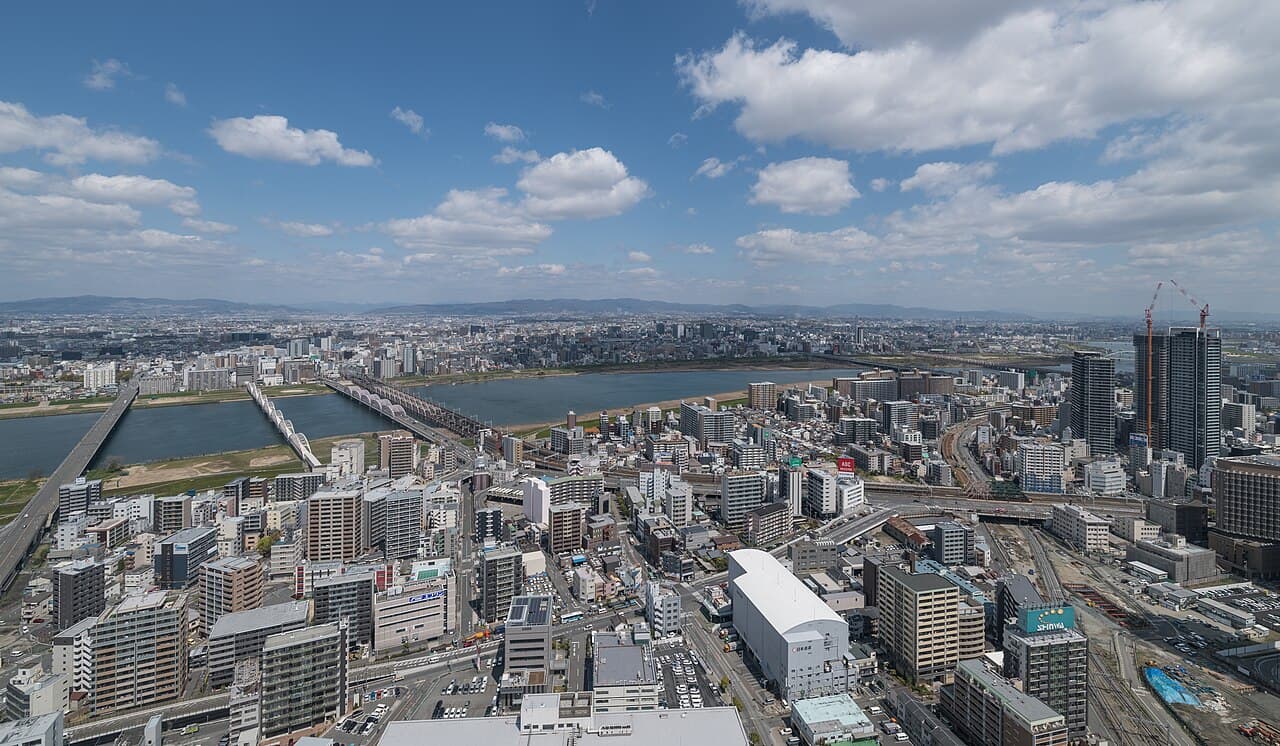
The observatory's official access page directs visitors to public transport and identifies its Abenosuji address. If you include it, check the current operation information and weather before buying. From above, Shitennoji and the southern city can gain spatial context, but the core heritage route remains complete without a viewpoint.
- Pause before the southbound leg.
- Check the Hankai departure point before leaving the station complex.
- Add the observatory only when visibility and time support it.
05
Use the Hankai tram as the connecting thread
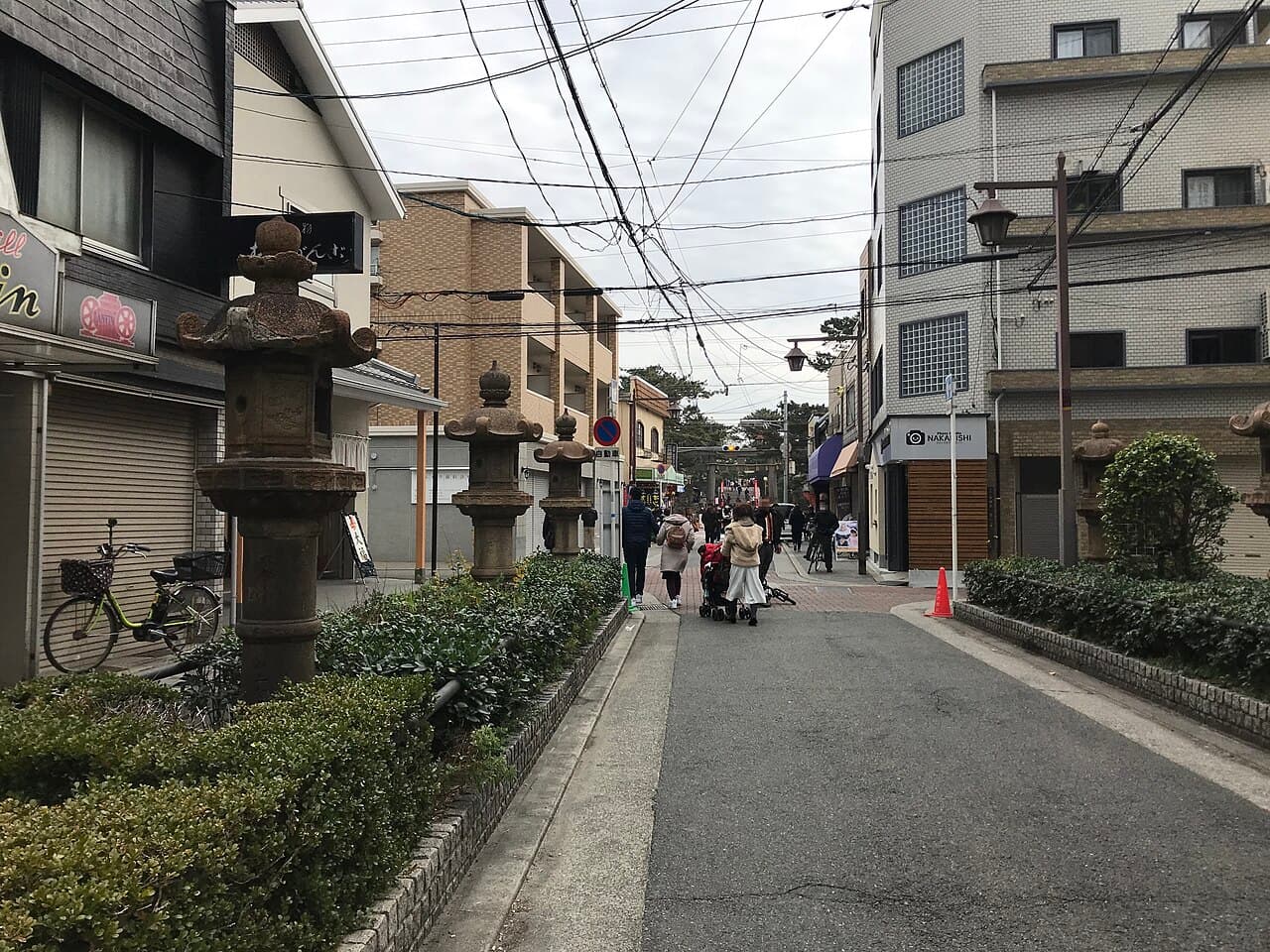
Hankai Tramway's English route map shows Tennoji-Ekimae and Sumiyoshitorii-mae on the network, with Sumiyoshi Taisha marked as a visitor landmark. This makes the tram a legible way to connect modern Abeno with the shrine district at street level. Check the live operator information for service changes before boarding.
Station names on different networks are easy to confuse. Sumiyoshitorii-mae is the Hankai stop at the shrine approach, while Nankai serves Sumiyoshitaisha Station and Sumiyoshihigashi Station on different lines. Save the exact stop that matches your chosen operator, and confirm the return route before entering the shrine grounds.
- Match the stop name to the operator logo.
- Keep a screenshot of the English Hankai route map.
- Check the return service before late-day exploration.
06
Read Sumiyoshi through sea and architecture
Sumiyoshi Taisha's official English guide connects the shrine with maritime protection and with ports that once supported international exchange. It also identifies the steep Sorihashi bridge and explains that the nearby Daikai Jinja faces west toward the sea. These details make the grounds more than a collection of vermilion photo points.
Look for the clear geometry of the shrine buildings, the relationship between bridge, approaches, and main shrines, and the repeated connection with travel by sea. The official tourism guide describes the main shrines as Sumiyoshi-zukuri and nationally protected. Avoid turning religious associations into personal promises; present them as the shrine's documented traditions.
- Use the official map to identify named structures.
- Cross the steep bridge only if it suits your mobility and conditions.
- Respect barriers around sacred buildings.
07
Finish with a verified return route
Before settling into the shrine grounds, check your return choices. Hankai can take you back toward Tennoji-Ekimae or Ebisucho according to the current network. Nankai offers another path toward Namba from Sumiyoshitaisha Station. The most useful option depends on your accommodation, not on completing the outbound route in reverse.
End the day at Sumiyoshi rather than adding Shinsekai or Dotonbori by default. The route already spans two major sacred sites and a cross-city transit story. If you do continue, make it a separate evening decision based on energy and live transport. This protects the heritage stops from becoming rushed preliminaries to dinner.
- Compare Hankai and Nankai for the return.
- Choose the arrival station nearest your final destination.
- Keep an optional evening separate from the core route.
Useful answers
Reader questions
Can Shitennoji and Sumiyoshi Taisha fit in one day?
Yes, if they are the day's two anchors. Use Tennoji or Abeno as the transfer and break point, then check the current Hankai, Nankai, and Metro routes before departure.
Sources: Shitennoji Temple; Hankai Tramway; Osaka Convention and Tourism BureauWhich tram stop is closest to Sumiyoshi Taisha?
The Hankai route map marks Sumiyoshitorii-mae for the shrine. Nankai uses different station names, so confirm both the operator and stop before boarding.
Sources: Hankai Tramway; Osaka Convention and Tourism BureauAre the visible Shitennoji buildings from 593?
No. The temple's foundation and layout tradition are ancient, but its official history records repeated destruction and reconstruction, including major twentieth-century rebuilding.
Sources: Shitennoji TempleShould I add Abeno Harukas Observatory?
Add it only if a city view matters more than extra time at the two sacred sites. Check current operation and access on the observatory's official pages before deciding.
Sources: Abeno Harukas ObservatoryRead the evidence
Sources and further reading
These sources support the relevant sections above. Plans and comparisons are editorial suggestions. Check operators for current arrangements.
- 四天王寺の歴史 ↗Shitennoji Temple · Research date 14 September 2026
Temple foundation, axial precinct plan, repeated destruction, and reconstruction history.
- Sumiyoshi Taisha ↗Sumiyoshi Taisha · Research date 14 September 2026
Sorihashi, Daikai Jinja, maritime associations, architecture, and named features of the shrine grounds.
- Sumiyoshi Taisha Shrine Guide ↗Osaka Convention and Tourism Bureau · Research date 14 September 2026
Official visitor access by Hankai and Nankai and the Sumiyoshi-zukuri heritage context.
- Route Map ↗Hankai Tramway · Research date 14 September 2026
Tram route between Tennoji-Ekimae and the Sumiyoshi area, including labeled visitor stops.
- Routes ↗Osaka Metro · Research date 14 September 2026
Official Metro lines, station names, station codes, and transfer relationships.
- Access information ↗Abeno Harukas Observatory · Research date 14 September 2026
Observatory location and official direction to use public transport.