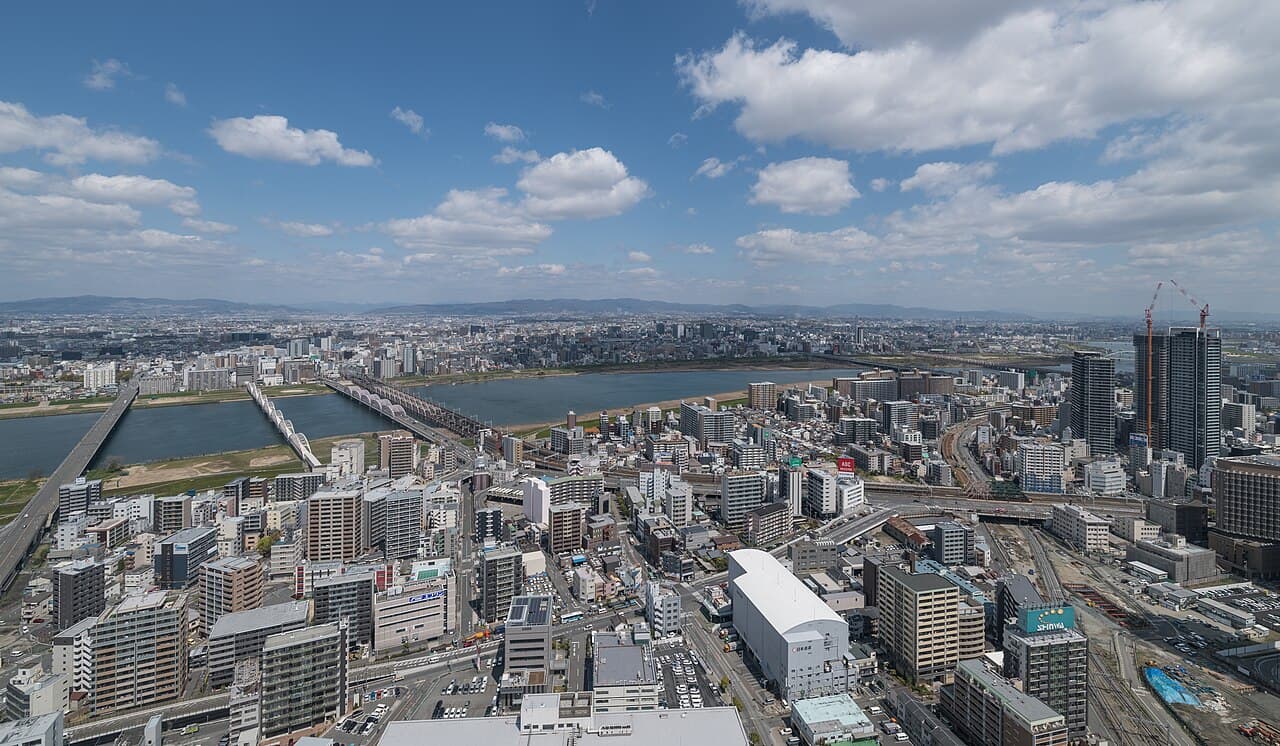
Plan Osaka around its two main central axes and one strong daily theme. Airport rail endpoints, city museums, southern heritage and regional day trips pull in different directions, so choose the base before fixing a timetable.
The sections below frame decisions rather than promise live times or prices. Recheck operators and venues for the exact date.
Map Namba, Osaka or Umeda, Shin-Osaka and Tennoji before booking the first-day route. They are distinct transfer points, and the airport service that looks fastest in isolation may add an avoidable interchange after a long flight.
AI-assisted destination research by Top10 Osaka Editorial. Suggested plans are editorial choices; sources and their scope appear below.
01
Match KIX transport to your base
Nankai, JR and airport buses serve different useful endpoints. The airport guide begins with terminal, hotel station and luggage rather than a universal fastest option.
Account for the Terminal 2 connection before comparing rail journeys.
- Pin Namba, Osaka/Umeda or Shin-Osaka.
- Check the live service after landing.
- Kansai Airport to Osaka: Choose the Right Train
Choose KIX transport by Osaka endpoint, terminal, luggage and transfers. Compare Nankai, JR and airport bus using live operator pages.
02
Build one museum day
Osaka's history, art, science and housing museums answer different questions. The planner helps choose one anchor and then add a nearby stop.
Current exhibitions and closures belong to each institution's own site.
- Choose by subject.
- Protect time for the collection.
- Osaka Museum Day Planner
Build an Osaka museum day around history, urban life, modern art, or science without overloading the schedule.
03
Use south Osaka for older urban layers
Shitennoji, Sumiyoshi Taisha and Sakai create a heritage route distinct from the castle-and-Dotonbori circuit. The guide explains why the sequence matters.
Treat temple and shrine spaces as active sites.
- Keep the route geographically coherent.
- Check worship and visitor guidance.
- South Osaka Heritage Route
Plan a respectful route through Shitennoji, Abeno, and Sumiyoshi Taisha using the Metro, Hankai tram, and Nankai lines.
04
Choose one rail day trip
Nara, Kobe and Sakai offer different subjects. Use the day-trip comparison to choose the destination, then build the live route in the relevant operator planner.
Do not turn Osaka into only a base for leaving Osaka.
- Select by purpose.
- Search exact stations and dates.
- Osaka Day Trips by Train: Nara, Kobe or Sakai
Compare Nara, Kobe, and Sakai as rail day trips from Osaka by theme, departure station, walking pattern, and return plan.
05
Read Osaka through waterways and trade
The water-city feature explains ports, canals and public waterfronts. The merchant-city article connects distribution and judgement to food and commerce.
Together they make a strong city-reading day without requiring a fixed attraction list.
- Follow one water corridor.
- Notice the relationship between trade and food.
- Why Osaka Is a Water City
Read Osaka through its rivers, bridges, Nakanoshima storehouses, civic buildings, museums, and present-day waterfront routes.
- How to Read Osaka's Merchant-City Traces
Trace Osaka's commercial history through canals, Nakanoshima storehouses, Semba, reconstructed townhouses, arcades, and markets.
06
Connect castle and stage history
Osaka Castle has been destroyed and rebuilt across different political moments; the castle feature keeps the present museum distinct from earlier structures. The stage article traces Bunraku, theatre and comedy through changing venues.
Choose the historical question before choosing the stop.
- Read reconstruction dates carefully.
- Check performance schedules directly.
- Osaka Castle Rebuilt Across Centuries
Understand Osaka Castle's Toyotomi origin, Tokugawa walls, citizen-funded tower, museum role, and newly visible archaeology.
- Osaka Stage Culture: Bunraku to Comedy
Explore how Dotonbori's theater history connects with Bunraku, Osaka Shochikuza, manzai, rakugo, and Yoshimoto stage comedy.
Before you decide
Planning questions
What should I compare for the KIX arrival journey?
Compare the route to your hotel station, not only the airport service name. Record the terminal, luggage and final walk; then examine Nankai, JR and bus endpoints. Include the Terminal 2 connection when it applies to the arrival.
Sources: Kansai AirportsShould I fit Nara, Kobe and Sakai into one Osaka day trip?
Choose one destination by the subject you want to explore, then build its return journey in the relevant operator planner. The comparison guide is a selection tool. Leave time in the overall stay for Osaka’s own neighbourhoods and museums.
Sources: West Japan Railway CompanyHow can I plan beyond Osaka Castle and Dotonbori?
Use the south-Osaka heritage guide for Shitennoji, Sumiyoshi Taisha and Sakai, or follow the water-city and merchant-history articles for another perspective. Choose one historical question and check the actual travel links before turning the reading list into a route.
Sources: Shitennoji Temple; City of Osaka; Osaka Convention and Tourism BureauCheck the details
Sources for your plan
Use the linked operators and institutions to check current arrangements. Each reference states the limited points it supports.
- Kansai Airport terminal access maps ↗Kansai Airports · Research date 2026-09-14
Official terminal maps show Kansai-Airport Station, the Terminal 1 and Aeroplaza connections, and the bus connection to Terminal 2. Current signs and shuttle notices control operational details.
- Osaka Museum of History ↗Osaka Museum of History · Research date 2026-09-14
Separate city-history museum, permanent-exhibition structure, visitor calendar, and proximity to the castle area.
- 四天王寺の歴史 ↗Shitennoji Temple · Research date 2026-09-14
Temple foundation, axial precinct plan, repeated destruction, and reconstruction history.
- Route Maps and Timetables ↗West Japan Railway Company · Research date 2026-09-14
Current JR network maps, route finder, station maps, and live service-status planning.
- Increasing the city's appeal ↗City of Osaka · Research date 2026-09-14
Official Water Corridor description, links between port trade and waterways, and present-day waterfront planning.
- Osaka Gastronomy: Osaka's Food Culture, the Nation's Kitchen ↗Osaka Convention and Tourism Bureau · Research date 2026-09-14
Merchant migration, distribution, canals, Semba, commercial judgment, and links between trade and food culture.
- Osaka Castle Museum ↗Osaka Convention and Tourism Bureau · Research date 2026-09-14
Toyotomi construction, destruction of earlier towers, 1931 citizen-funded tower, and museum use.
- Dotonbori ↗Osaka Convention and Tourism Bureau · Research date 2026-09-14
Canal and theater-district development, relationship with restaurants, present performance venues, and large-sign culture.