Connect this guide with the rest of your visit in the Osaka trip planner. Read how the research is made and what its sources establish.
At a glance
Start here
- Osaka's commercial role grew through distribution, waterways, and attracted merchant communities.
- Nakanoshima and Semba show the relationship between storage, exchange, and wholesale activity.
- The Museum of Housing and Living restores domestic and street scale to the larger economic story.
- Tenjinbashisuji and Kuromon remain active commercial spaces, not historical stage sets.
01
Merchant Osaka was a city system
Osaka's official gastronomy history links Hideyoshi's castle building with the attraction of merchants from Sakai and Fushimi and the city's growth as a distribution center. It also ties commercial development to boat transport and canals. Merchants, infrastructure, and goods formed one system rather than separate heritage themes.
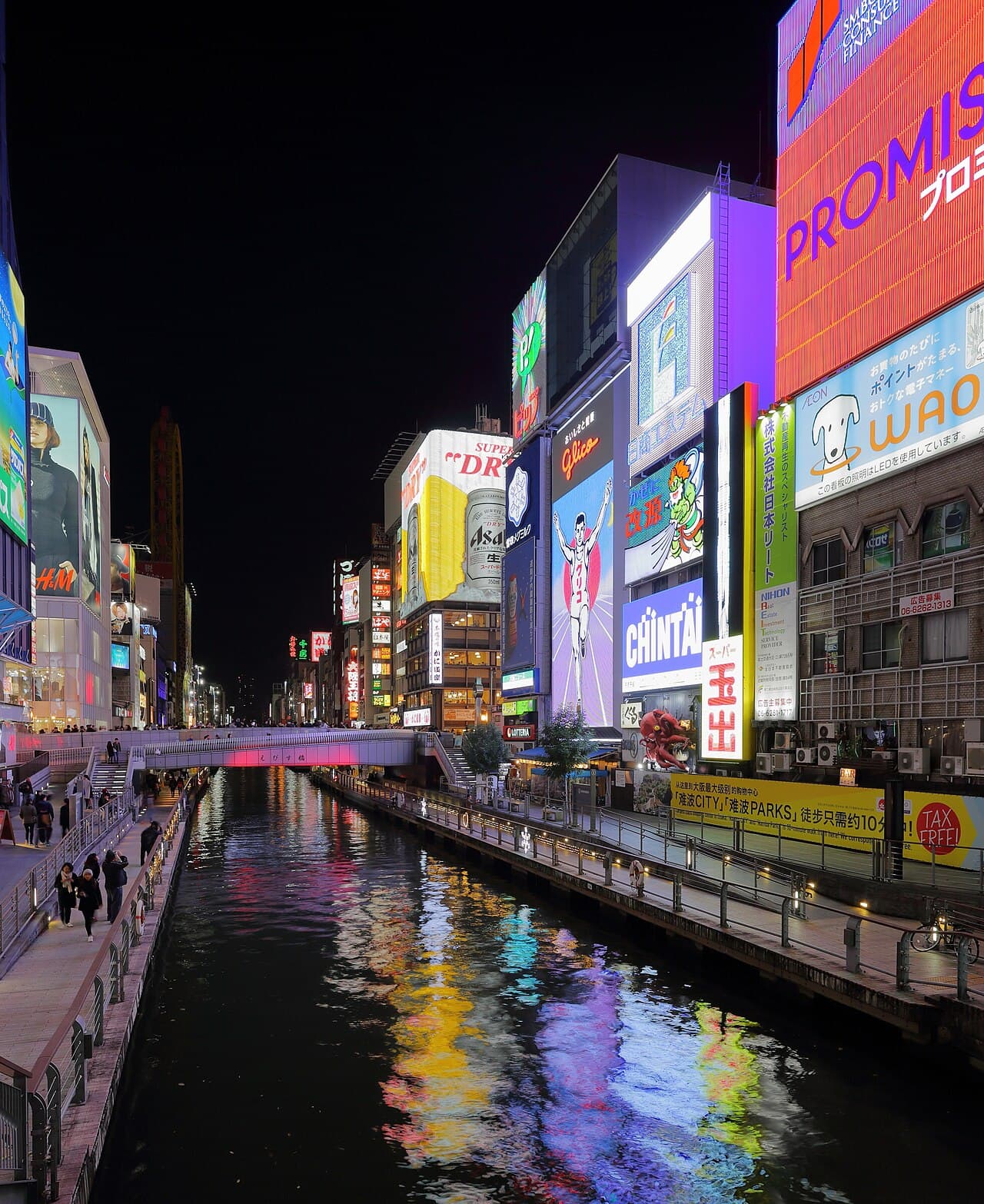
This system explains why food culture, wholesale trade, river geography, and dense shopping streets repeatedly overlap in Osaka. A visitor can read merchant history without buying an expensive experience: follow where goods could move, where stores and markets concentrated, and where people lived behind or above commercial frontages.
- Begin with movement of goods rather than a restaurant list.
- Connect waterways with storage and wholesale districts.
- Look for the boundary between public shopfront and domestic space.
02
Nakanoshima and Semba carried exchange
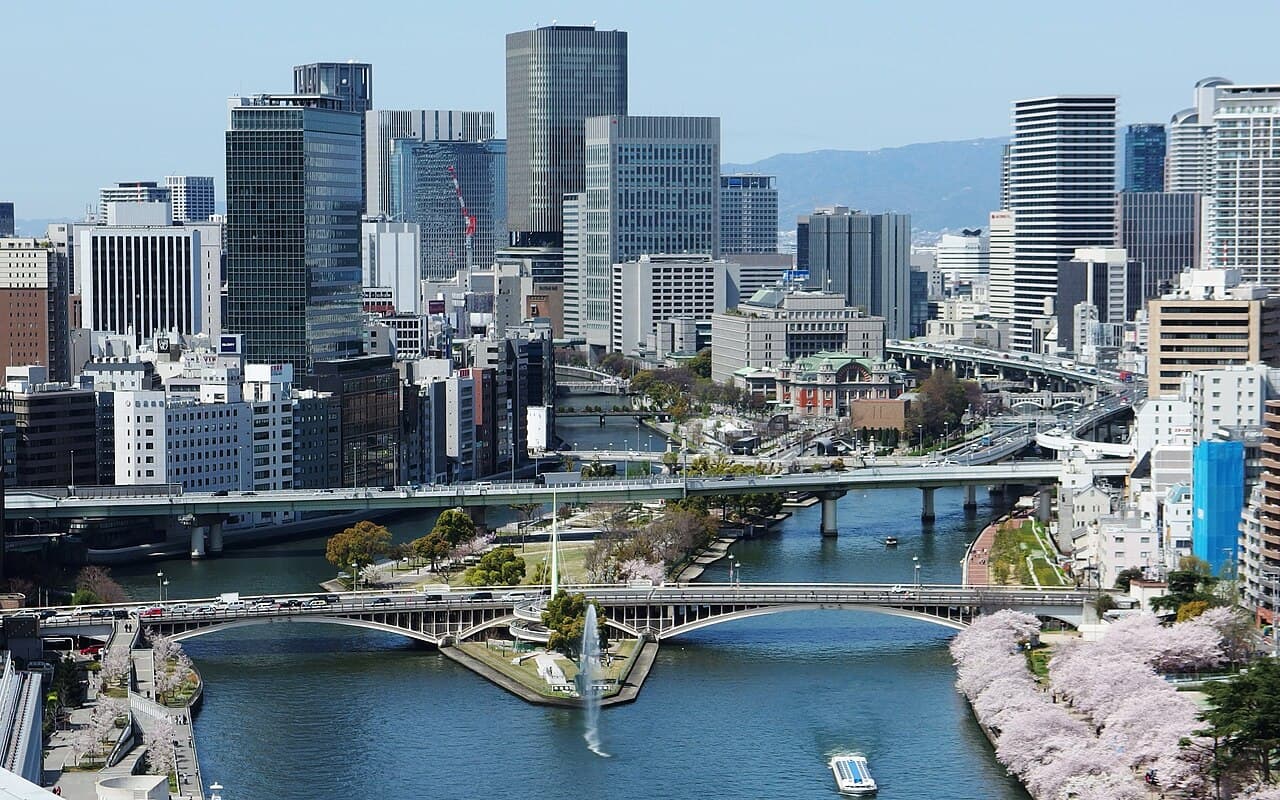
The official Nakanoshima guide describes domain storehouses and commodity trade on the river island during the Edo period. Nearby Semba is identified by Osaka tourism material as the historic center of merchant and wholesale activity. Together they show that commercial Osaka required both waterfront handling and inland business districts.
Much of the historic fabric has changed, so the route depends on relationships more than on a complete preserved streetscape. Stand on a Nakanoshima bridge, identify the riverbanks, then continue south toward Semba. Modern offices do not cancel the historical logic; they show how valuable central commercial geography persisted through redevelopment.
- Use a bridge view to understand Nakanoshima's storage advantage.
- Continue into Semba as a change of commercial scale.
- Avoid claiming that modern buildings reproduce the Edo-period city.
03
Food culture followed trade and judgment
Official Osaka gastronomy material presents merchant judgment, careful accounting, and the coexistence of economical household practice with refined business dining as part of the city's food history. That account is more specific than the familiar idea that Osaka simply loves to eat. Food quality developed within networks of supply, negotiation, hospitality, and repeat customers.
Use this history as context, not as proof that any current restaurant preserves an unbroken tradition. A modern menu, price, or claim needs its own evidence. The durable lesson is that commercial exchange influenced both everyday cooking and formal dining, while waterways brought ingredients and information into the city.
- Separate city-wide food history from venue marketing.
- Ask how an ingredient reached Osaka and where it was sold.
- Do not turn historical frugality into a promise about present prices.
04
The housing museum restores human scale
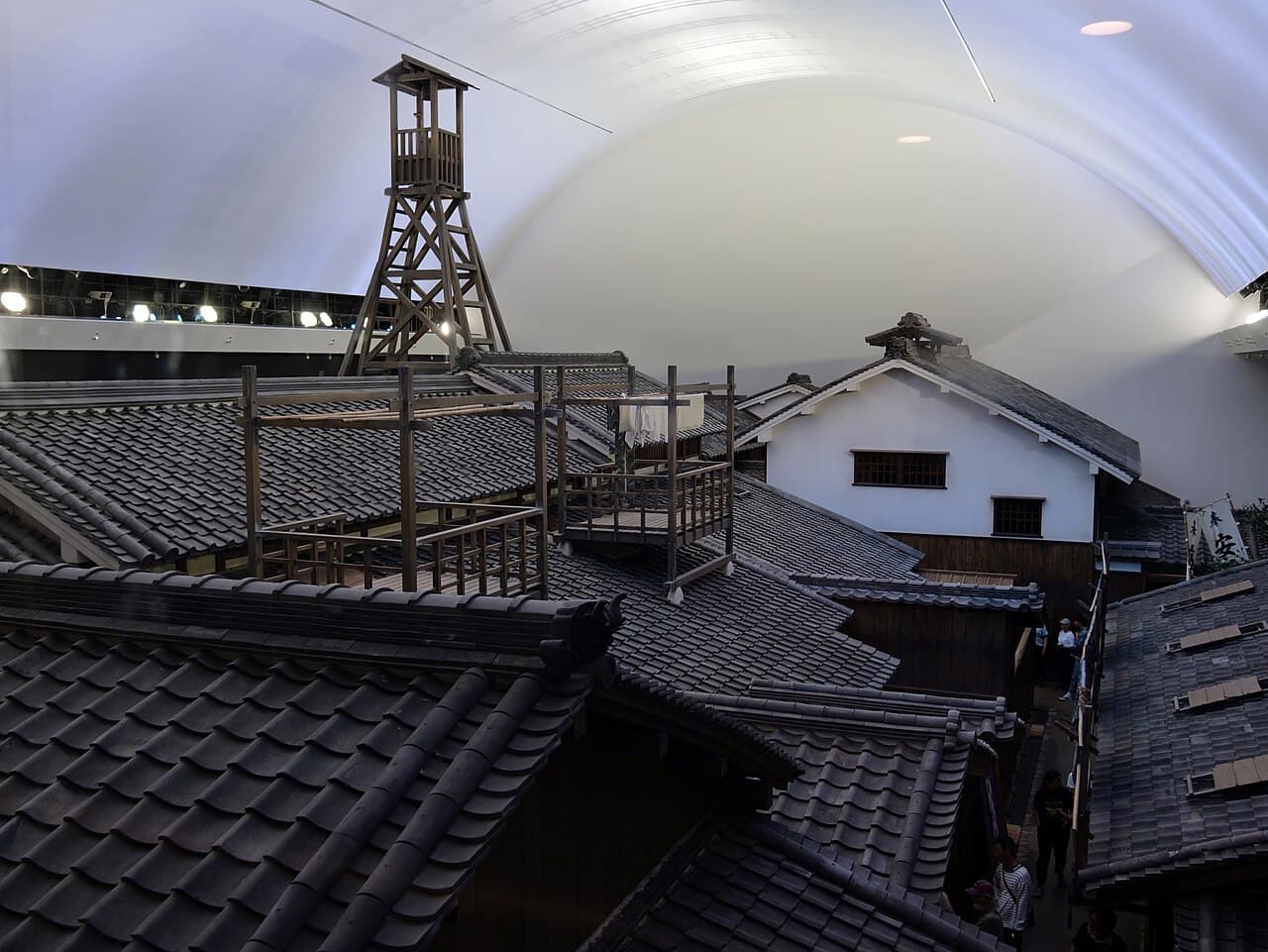
Large economic histories can hide rooms, alleys, and daily routines. The Museum of Housing and Living addresses that gap through life-size early-modern Osaka townhouses and models of later urban change. It gives visitors a way to consider how commerce and domestic life shared the same street environment.
The recreation should be read as museum interpretation, not mistaken for an untouched Edo-period district. Its value lies in making spatial relationships tangible: street width, frontage, threshold, shop area, and living space. Following the museum with a walk in Tenjinbashisuji lets you compare interpreted historical form with an active present-day arcade.
- Read labels before treating the recreation as documentary reality.
- Notice how business and domestic functions meet.
- Carry one spatial question into the modern street outside.
05
Tenjinbashisuji shows commercial continuity
Tenjinbashisuji extends through several numbered chome and is accessible from multiple rail and Metro stations. The official guide traces its development from the temple-town setting around Osaka Tenmangu toward the shopping street that took shape in the modern period. Its length reflects several neighborhood segments rather than one uniform visitor strip.
Walk only part of it with a purpose. Near the northern end, pair the arcade with the housing museum. Farther south, relate the street to Osaka Tenmangu and the route toward Nakanoshima. Business hours vary by shop, so an article cannot truthfully promise a particular storefront will be open. Observe the mix and rhythm of uses instead.
- Choose a segment based on the nearest station and adjacent site.
- Keep moving past congested storefronts.
- Treat everyday services as part of the street's character.
06
Kuromon reveals the market layer
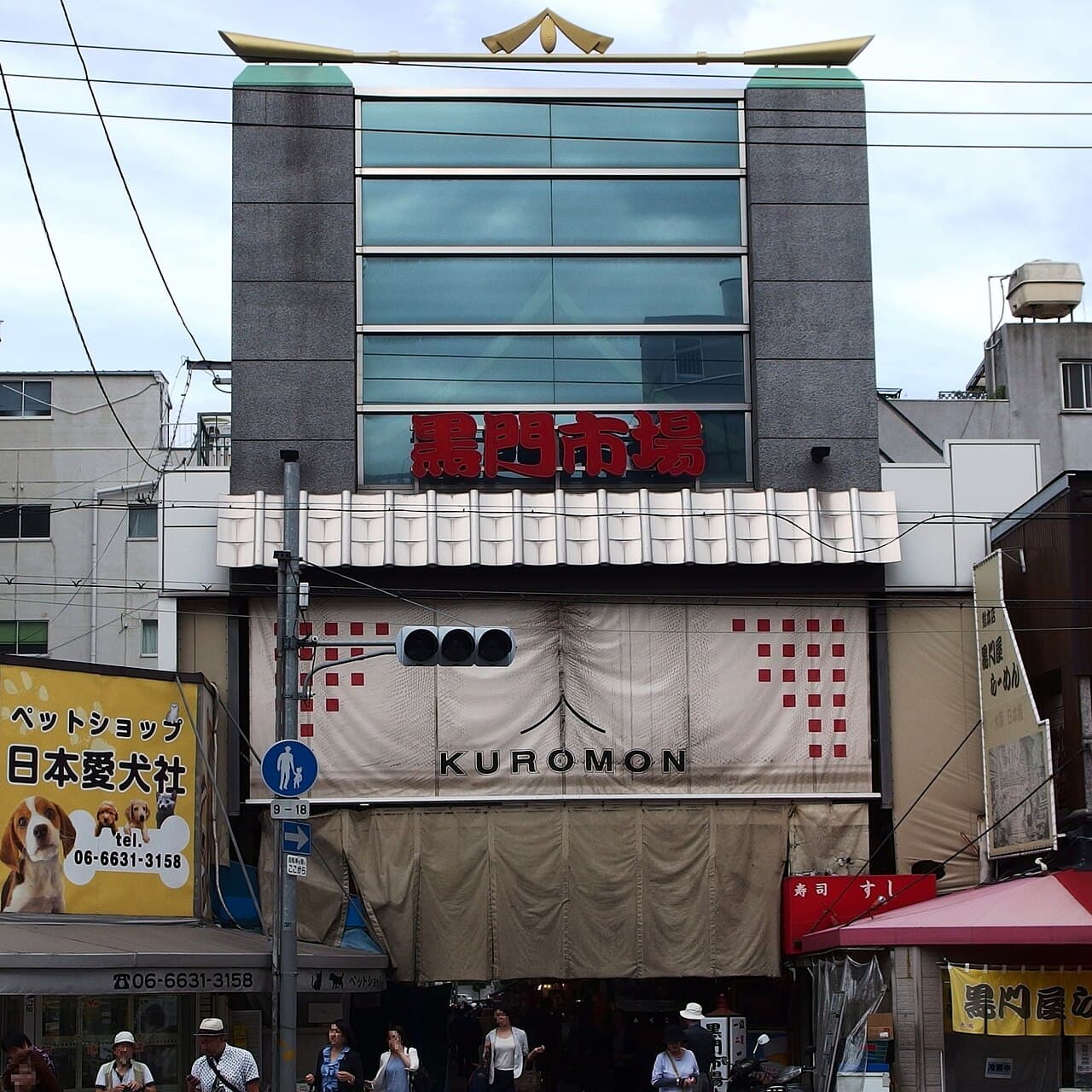
Kuromon's official market site describes a roofed market in Osaka's Minami area with seafood, produce, meat, prepared food, and other shops. The categories matter more than a fixed shop count: they show a market that combines ingredient trade, retail, eating, and visitor attention within one corridor.
Approach Kuromon as an operating commercial place. Use the official store map, browse before ordering, and follow each shop's direction about payment, eating, and waste. A market visit should not become a claim that every stall is traditional, locally oriented, inexpensive, or suited to every diet. Those are mutable venue-level questions.
- Check the current official store map.
- Keep entrances and display fronts clear.
- Ask vendors about ingredients rather than guessing.
07
Read commerce without romanticizing it
A merchant-city route should acknowledge replacement, adaptation, and tourism. Nakanoshima's storehouses are historical context rather than a complete surviving warehouse district. The housing museum is a reconstruction. Tenjinbashisuji and Kuromon contain present businesses whose mix changes. Semba remains commercial but is not frozen in one era.
Those qualifications make the story stronger. Osaka's commercial identity lies in repeated use of central routes, in institutions built from private and corporate wealth, and in the continuing overlap of food, retail, mobility, and public life. Follow evidence at each stop and let the differences between periods remain visible.
- Label reconstructions and surviving fabric accurately.
- Do not infer a shop's age or ownership from its appearance.
- Use current official pages for openings, programs, and market maps.
Useful answers
Reader questions
Where can I see Osaka's merchant history?
Use several complementary places: Nakanoshima for trade geography, Semba for commercial continuity, the Museum of Housing and Living for urban domestic scale, and an active arcade or market for the present city.
Sources: Osaka Convention and Tourism Bureau; Osaka Convention and Tourism Bureau; Osaka Convention and Tourism Bureau; Osaka Convention and Tourism BureauIs there one preserved merchant quarter in central Osaka?
Not in the sense of a complete district frozen in one era. The story is distributed across waterways, modern commercial streets, reconstructions, museums, and surviving institutions.
Sources: Osaka Convention and Tourism Bureau; Osaka Convention and Tourism Bureau; Osaka Convention and Tourism BureauHow should I visit Tenjinbashisuji?
Choose a section rather than assuming you must walk the full street. Pair the north with the housing museum or the south with Osaka Tenmangu and Nakanoshima, and check individual businesses directly.
Sources: Osaka Convention and Tourism Bureau; Osaka Convention and Tourism BureauIs Kuromon only a place for prepared food?
No. Its official map describes seafood, produce, meat, restaurants, sweets, and other retail categories. The current tenant mix should be checked on the market's own site.
Sources: Kuromon MarketRead the evidence
Sources and further reading
These sources support the relevant sections above. Plans and comparisons are editorial suggestions. Check operators for current arrangements.
- Osaka Gastronomy: Osaka's Food Culture, the Nation's Kitchen ↗Osaka Convention and Tourism Bureau · Research date 14 September 2026
Merchant migration, distribution, canals, Semba, commercial judgment, and links between trade and food culture.
- Nakanoshima ↗Osaka Convention and Tourism Bureau · Research date 14 September 2026
Edo-period domain storehouses, rice and commodity trade, and later civic and cultural uses of the island.
- Osaka City Housing Museum: Osaka Museum of Living Then and Now ↗Osaka Convention and Tourism Bureau · Research date 14 September 2026
Life-size early-modern townhouses, later urban models, housing focus, and Tenjinbashi location.
- Tenjinbashisuji Shopping Street ↗Osaka Convention and Tourism Bureau · Research date 14 September 2026
Street extent, multiple station access points, temple-town origin, later development, and varied shop schedules.
- Kuromon Market Official Store Map ↗Kuromon Market · Research date 14 September 2026
Market location, roofed corridor, current store-map function, and broad retail and food categories.